
Two grids, two rhythms#
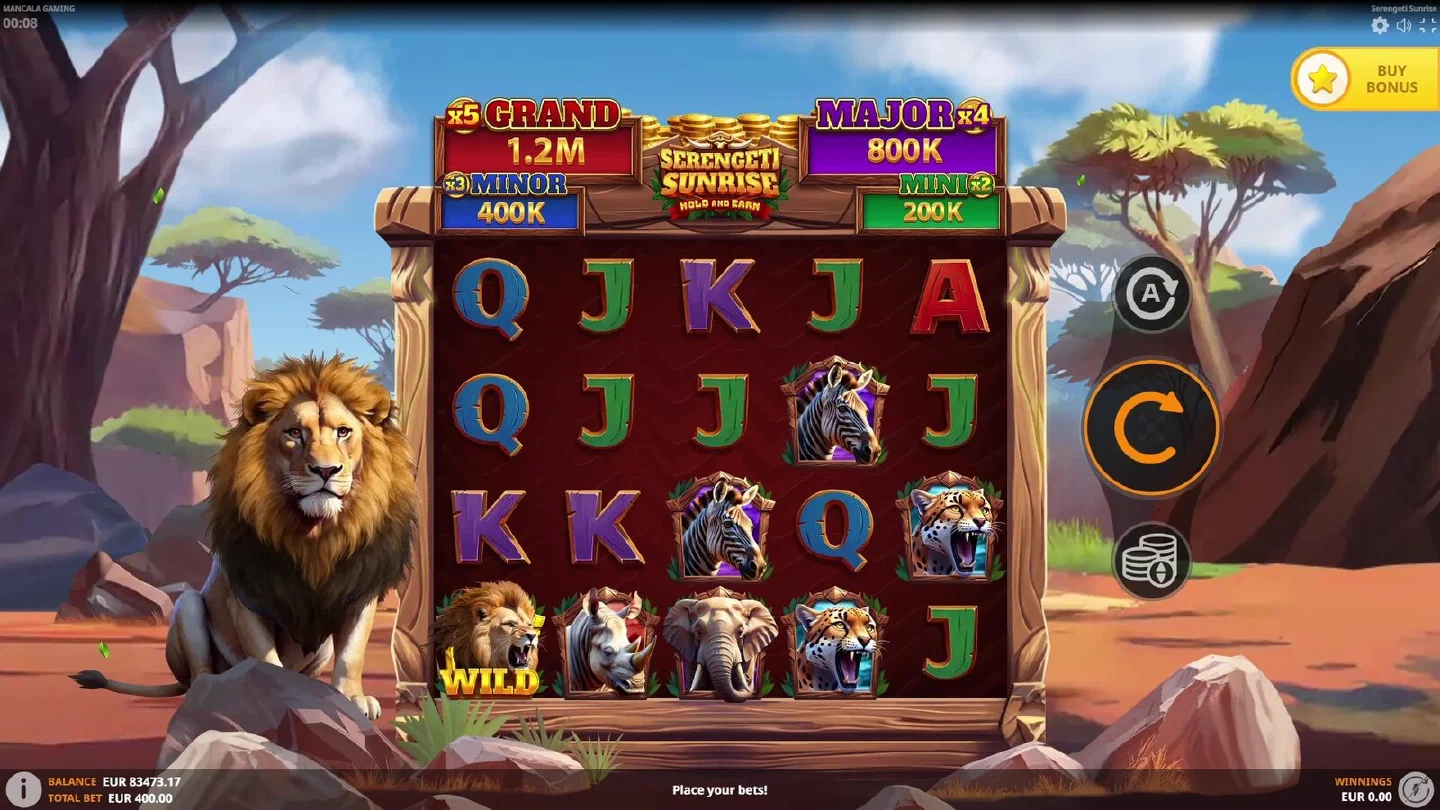
Forty paylines against nine, and you feel it on every spin. Serengeti Sunrise runs a 5x4 grid, five reels by four rows, with 40 paylines that pay from the leftmost reel to the right and count only the highest combination on each line. Great Game Serengeti runs a 5x3, five reels by three rows, with 9 paylines.
That difference shapes the whole experience of the base game. A wider grid with more than four times the lines, 40 against 9, produces more frequent small returns and a busier screen: more near-misses, more partial combinations, more reason to keep watching. A tight 9-line grid is quieter and more deliberate, and it concentrates its payouts into fewer, bigger events.
Neither approach is better in the abstract. What matters is which one keeps you engaged while you wait, because both games make you wait for the round that counts. If you dislike long dry stretches, the 40-line grid gives you more to look at. If you find busy screens tiring, the narrower one will suit you.
There is a second structural difference worth noting: the extra row. Four rows instead of three means twenty positions instead of fifteen, which is why a Hold and Win round on the Mancala Gaming grid has more space to fill and a bigger board to lock symbols onto. The mechanics are explained in full on the how to play page .

And before anything else, the names. Serengeti Sunrise is by Mancala Gaming. Great Game Serengeti is by Hacksaw Gaming. Serengeti Sunset is by Skywind Group. Three savanna titles, three studios, one very confused set of lobby tiles, and all three surface on the same searches.
RTP and volatility: what each one asks of you#
The published numbers: 96.29% for the Hacksaw title in its demo configuration, 95% for Serengeti Sunrise. On paper that favours the rival by 1.29 percentage points, which over 1,000 spins at a total bet of 20 is a difference of about 258 credits in expected return across the long run. Each casino also runs the configuration it has licensed, so the game info panel in your room is the reference that counts on either title.
Volatility is where the two diverge more meaningfully. Serengeti Sunrise is rated 4 of 5 on its provider’s scale; the Hacksaw game sits at 3 of 5 on its own. Those are two different studios’ scales, not a shared standard, so treat them as a direction and not as a measurement. The direction is clear enough: the Mancala Gaming title swings harder.
Serengeti Sunrise also publishes a hit frequency of 15.99%, which puts a number on the waiting. Almost 16 spins in every 100 return something, most of them small, and the rest of the value is held back for the respin round. That is the trade the 95% buys: a lower steady return in exchange for a jackpot layer that starts at 500x on two symbols.
Both games cap a round at 5,000x the total bet, which is the single most important line in the table because it means neither has a structural advantage at the top. The difference is entirely in the road there. The arithmetic on our side is laid out at four stake levels on the RTP page .
What only Serengeti Sunrise has#
The jackpot ladder is the clearest point of difference, and it does not appear in the comparison table because the other game has nothing to put in that row. Mini at 500x on two Jackpot symbols, Minor at 1,000x on three, Major at 2,000x on four, Grand at 3,000x on five, all as multiples of your own total bet.
Two symbols for 500x is a short ladder, and this game’s own paytable is the clearest measure of it: five elephants across a full line pay 50x, a tenth of the Mini. And since the round is capped at 5,000x while the Grand is 3,000x, there is 2,000x of headroom above the biggest jackpot for the special symbol multipliers to fill.
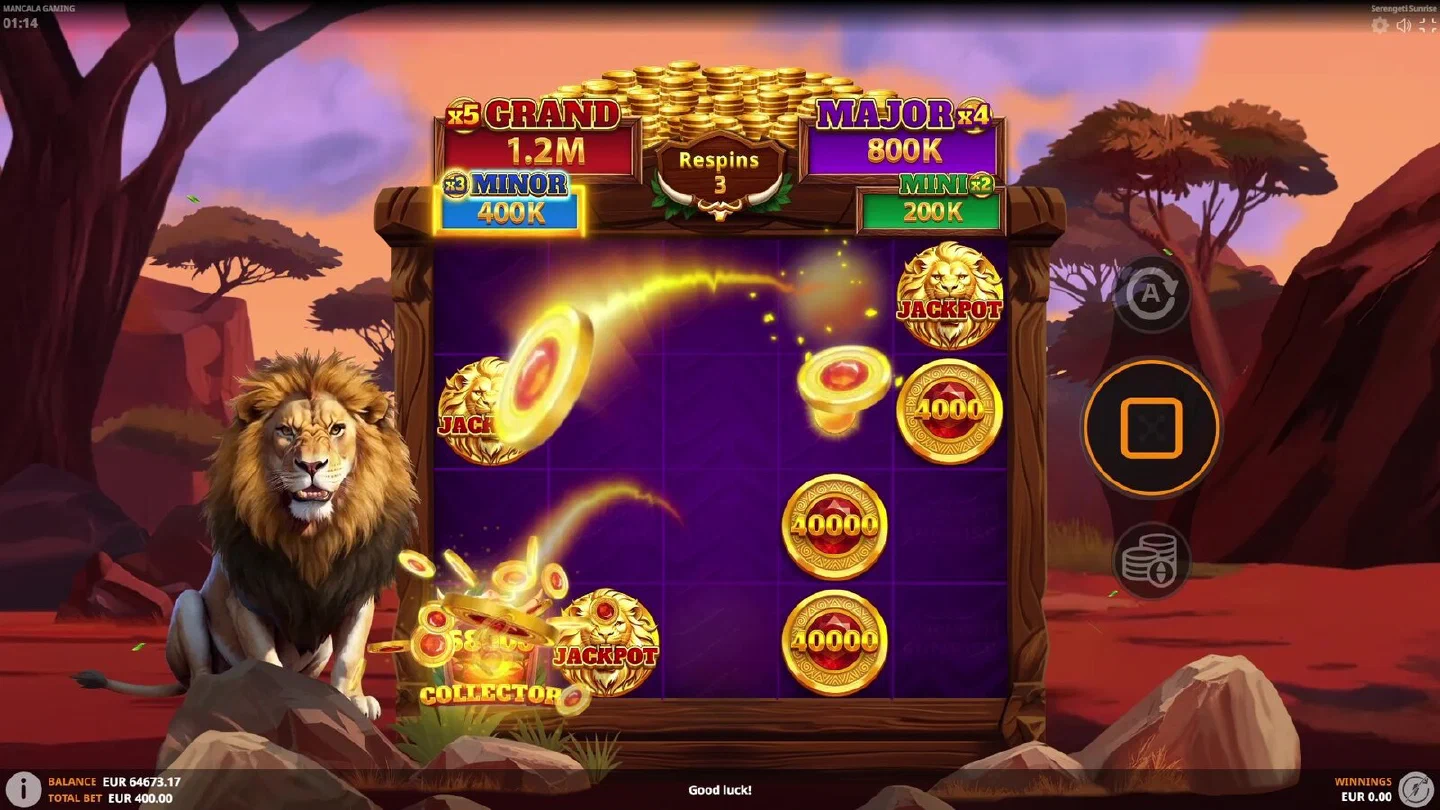
The collector is the second exclusive. During the bonus it gathers the payouts of every special symbol on screen and then clears those symbols off the board, which frees space for new ones to land. Combined with the entry rule, 6 special and/or Jackpot symbols to open the round with 3 respins, and the reset rule, where every new symbol sends the counter back to 3, you get a round that compounds instead of one that simply runs down a timer.
The bonus buy is simpler here too. One option at 80x the total bet, against a menu of five different feature purchases on the Hacksaw side. Simplicity is worth something when you are budgeting a session: with a single price you always know what the round costs relative to your stake, with no comparison shopping between entries that each carry their own maths.
Two paths to the same 5,000x#
The shared ceiling is the most useful line in the whole comparison, because it turns a vague question about which game is better into a specific one about which road you prefer.
On the Mancala Gaming side the road runs through a single bonus round that builds. Six special and/or Jackpot symbols open it, three respins start the clock, every new symbol resets the counter to 3, and the collector clears gathered symbols off the board so more can land. The value arrives from two directions at once. The jackpot ladder pays by symbol count, from 500x on two up to 3,000x on five. The special symbols pay by their own value, the standard one being ten times the total bet and the largest a hundred times it. A board holding a 100x, a 75x and a 50x is carrying 225x before the collector has even fired, which is how the 2,000x sitting between the Grand and the cap stops being theoretical.
On the Hacksaw side the road runs through a hunting mechanic and a menu of five different feature purchases, each with its own price and its own maths. That structure offers variety and a choice of entry point, at the cost of complexity: you are picking between products instead of deciding a single yes or no.
Which you prefer usually comes down to temperament. A single-price buy at 80x is a budget line you can write down before a session starts. A five-entry menu is a decision you make repeatedly, at speed, while the reels are in front of you, and that suits players who enjoy the optionality and costs players who do not.
There is one difference in what the two games publish, and it should not be glossed over. Serengeti Sunrise states its hit frequency, 15.99%, which lets you picture the base game before you play it. That figure is a genuine planning tool: it tells you a hundred spins will produce somewhere around sixteen winning ones, most of them small, and it lets you size a stake accordingly. The strategy page builds on exactly that number.
Making the choice#
If you want jackpots you can see coming and a base game with plenty happening on it, Serengeti Sunrise is the straightforward pick, and everything about it lives on the game hub . If you prefer a narrow grid and a menu of different ways into the bonus, the Hacksaw title is built for that style instead, and nothing here is meant to talk you out of it.
A note on how to read the table above, because comparisons like this get misused. The RTP figures come from two different studios’ published configurations, and each casino runs the tier it has licensed, so the number in your own room’s info panel outranks anything written here. The volatility ratings come from two separate in-house scales and are directional rather than comparable to a decimal place. Only the grid, the payline count and the 5,000x cap are like-for-like facts that hold everywhere.
That is also why the rows where only one game has a figure were left out entirely instead of filled with a dash. The four fixed jackpots, the collector and the 15.99% hit frequency belong to Serengeti Sunrise and have no counterpart on the other side, so they are argued in the text where they can be explained, instead of being smuggled into a table as an implied deficiency.
Try before you decide either way. The Serengeti Sunrise demo runs the provider’s own launcher on practice credits, and twenty spins will tell you whether the 40-line rhythm suits you better than a tighter grid would.