

Serengeti Sunrise: the session plan
What high volatility means at the stake slider, and where a plan genuinely changes the outcome of an evening.
What kind of slot this is#
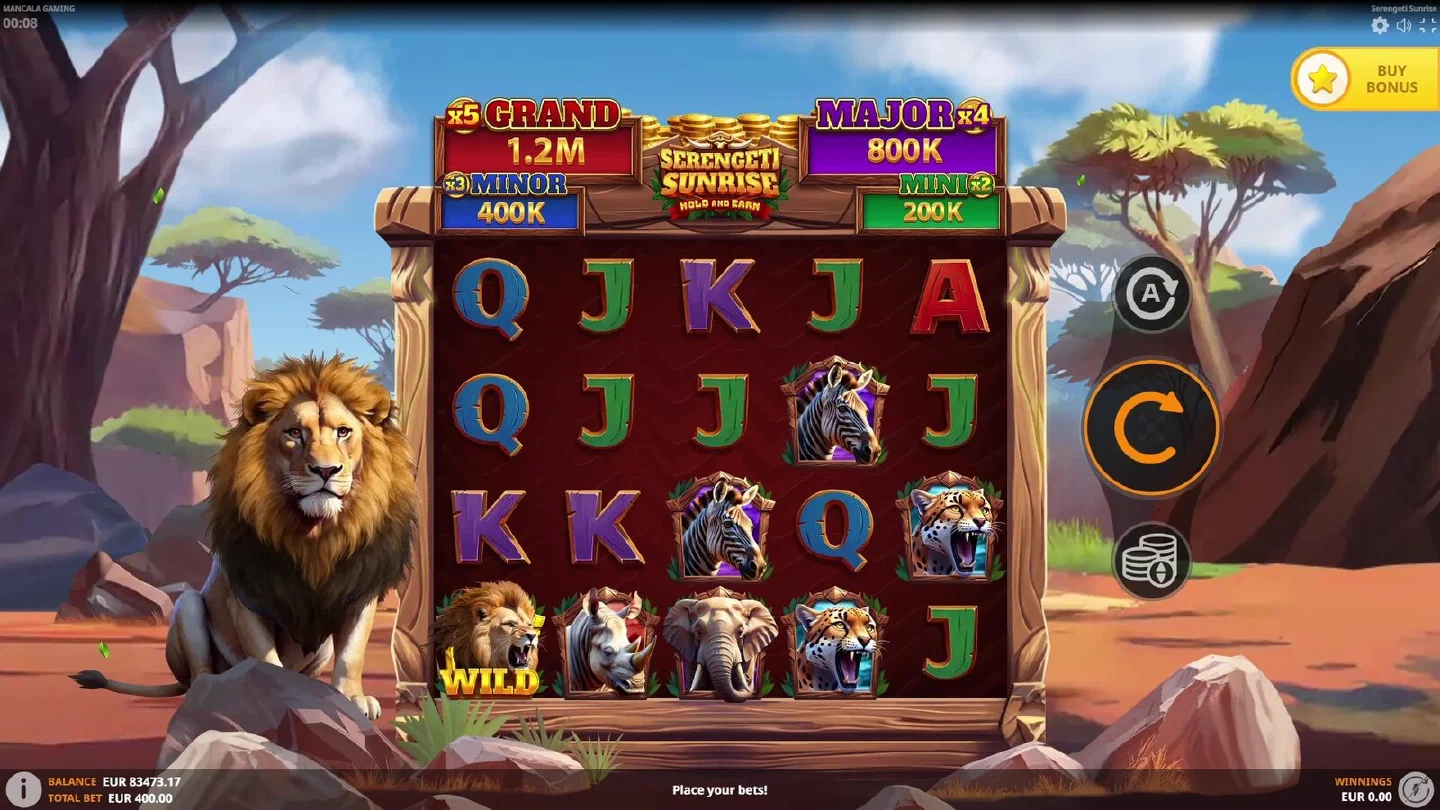
Serengeti Sunrise is rated high volatility, 4 of 5, and 15.99% of its spins land a win. Those two numbers are the whole brief for a session plan. Almost 16 spins in every 100 pay something, most of them small, and the value the game holds back gets released in clusters inside the Hold and Win round.
A calmer slot spreads its return across the base game and pays you something often. This one does the opposite: the ceiling is 5,000x the bet per round and the jackpot ladder starts at 500x, so the quiet spins are what funds the loud ones. The published RTP of 95% is the long-run average across millions of rounds, and you will personally never see it converge.
The practical translation: at a given stake, a bankroll that would see out a long run on a calmer slot covers fewer spins of this one before the first respin round arrives. That is not a flaw, it is the design, and the correct response is to drop the stake instead of shortening the session, because the respin round is the only place the money is.
Anyone who arrived looking for Serengeti Sunrise cheats or a hack deserves a straight answer instead of a runaround. The outcome of a spin cannot be altered or predicted, and the reason is structural: the generator producing it is independently tested and certified, and it carries no memory of the spin before. What follows is the part you actually control. The numbers behind it are on the RTP and maths page .
Choosing your bet level#
Raise the bet and everything scales with it, the shortcut included. The total bet runs from 20 to 1,800 on the demo scale, which each casino maps onto its own currency, so the levels below are ratios, not prices.
| Level | Total bet | Bonus buy at 80x | Mini at 500x | Grand at 3,000x |
|---|---|---|---|---|
| Cautious | 20 | 1,600 | 10,000 | 60,000 |
| Standard | 100 | 8,000 | 50,000 | 300,000 |
| Committed | 200 | 16,000 | 100,000 | 600,000 |
The cautious level is where most sessions should begin, and not because of timidity. At a stake of 20 a budget of 8,000 credits buys 400 base spins, which is enough for the hit rate to show you its real shape and enough to see two or three respin rounds. At a stake of 200 the same budget is 40 spins, which is not a session, it is a coin flip with extra steps.
The committed level makes sense only in one situation: your budget is large enough that 40 or 50 base spins plus a couple of buys still leaves you comfortable. The jackpot values at that level are genuinely attractive, with the Grand worth 600,000 credits, but the arithmetic runs both ways: every blank spin costs ten times what it costs at the cautious level.
One useful rule regardless of level: pick the stake at the start and keep it. Raising the bet after a cold run is the most common way players turn a planned session into an unplanned one, and it has no effect whatsoever on what the next spin does.
Buy the bonus or wait for it#
Eighty times your bet is the price of the shortcut; six symbols are the long road. Both paths land you in the same round with the same 3 respins, the same sticky symbols and the same four jackpots on the ladder.
Waiting for it. You play the base game, 40 paylines at a time, taking the small wins from the royals and the occasional premium line while you watch for special symbols to cluster. The advantage is that base spins cost 1x your stake instead of 80x, and the jackpot ladder is live the whole time. The disadvantage is the waiting, which at 15.99% is substantial and is precisely what the buy exists to remove.
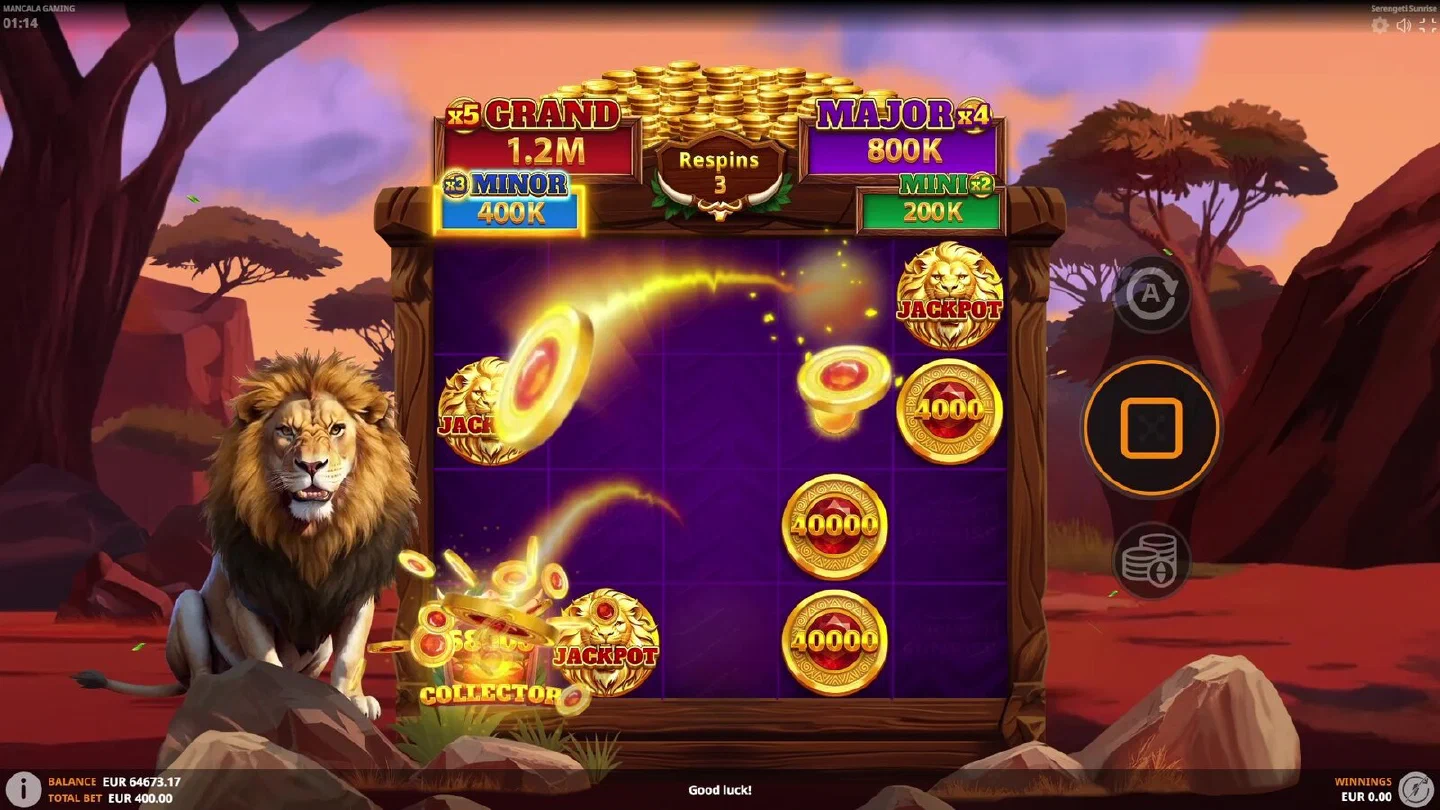
Buying it. One option, 80x the total bet: 1,600 credits at a stake of 20, 8,000 at 100, 16,000 at 200. You skip straight to the respins. What makes the round worth buying is the reset rule, because the counter goes back to 3 every time a new symbol lands, and the collector clears collected symbols off the board so more can arrive. A round with a live board compounds; a cold one is over in three spins.
Frame it as budgeting, not as expected value. Decide the number of buys before the first one: five at a stake of 20 is 8,000 credits, a defined cost with a defined stopping point. What ruins sessions is buy number six after five quiet rounds, bought on the feeling that the game owes you something. It does not, and the generator has no memory of the previous five.
A reasonable hybrid works well here: run base spins at your chosen stake until a set point, then spend a fixed slice of the remaining budget on buys. The features page sets out what the purchased round contains, and the demo lets you try the buy for nothing first.
The limits inside autoplay#
Autoplay carries a round count, a loss limit and a win limit. The round count is the setting everybody uses and the least important of the three.
The loss limit is your brake. Set it at the number you decided before you sat down, and set it as a figure you can say out loud without wincing. In a high volatility game a run of blank spins is normal, not unlucky, and the brake exists so that normal does not become expensive.
The win limit is the one players skip, and it is arguably the sharper tool. A Hold and Win round that pays 500x at a stake of 20 puts 10,000 credits on your balance, and an autoplay run with no win limit will feed that straight back into a base game which is designed to take it. Setting a win limit turns a good round into a finished session instead of an interesting middle chapter.
Pair the two limits with the stake you picked earlier and the session has a shape before it starts: a budget, a stake, a stopping point on each side. That is the entire strategy, and every part of it is decided before the first spin rather than during the twentieth. Keep the responsible gambling page open in another tab while you set it up.
Three session shapes that work#
A plan is easier to keep when it has a shape. Pick one of these, write the numbers down, and the evening runs itself.
The long grind. Stake 20, budget 8,000 credits, no bonus buys. That is 400 base spins, which at a 15.99% hit rate produces enough winning spins to keep the balance moving and gives the six-symbol trigger a genuine number of chances. Set the autoplay loss limit at the full budget and the win limit at double it. This is the shape that suits the game’s maths best, because it maximises the number of times you ask the question.
The split. Same budget of 8,000, but half of it goes on base spins at 20 and two bonus buys at 1,600 each take 3,200 of the other half, leaving 800 in reserve. You get 200 spins plus two guaranteed rounds. The advantage is that you will definitely see the respin round; the cost is 200 fewer chances to trigger it for free. Good for a shorter sitting where the point is to experience the bonus instead of grinding toward it.
The buy session. Budget 8,000, stake 20, five bonus buys at 80x and nothing else. Fast, high variance, over in minutes. It is the purest version of the game’s proposition: five rounds, each with a shot at a ladder that starts at 500x and a cap at 5,000x. It is also the shape where discipline matters most, because five buys with nothing to show for them is a completely normal outcome and the temptation to fund a sixth is exactly the trap.
Scale any of the three by moving the stake and the structure survives intact, because every figure in the game is a multiple of the bet. At a stake of 100 the budget becomes 40,000: the long grind is still 400 base spins, the split is still half and half, 200 spins plus two buys at 8,000 each with 4,000 left over, and the buy session is still five purchases at 8,000 apiece. What does not change is that a round is capped at 5,000x and the game pays back 95% across the long run, and neither figure cares which shape you chose.
One rule applies to all three: whatever you set at the start stays set. Raising a stake mid-session, adding a buy after a miss, or extending a budget because a round “felt close” are the three decisions that turn a plan into a story you tell afterwards.
What actually decides the outcome#
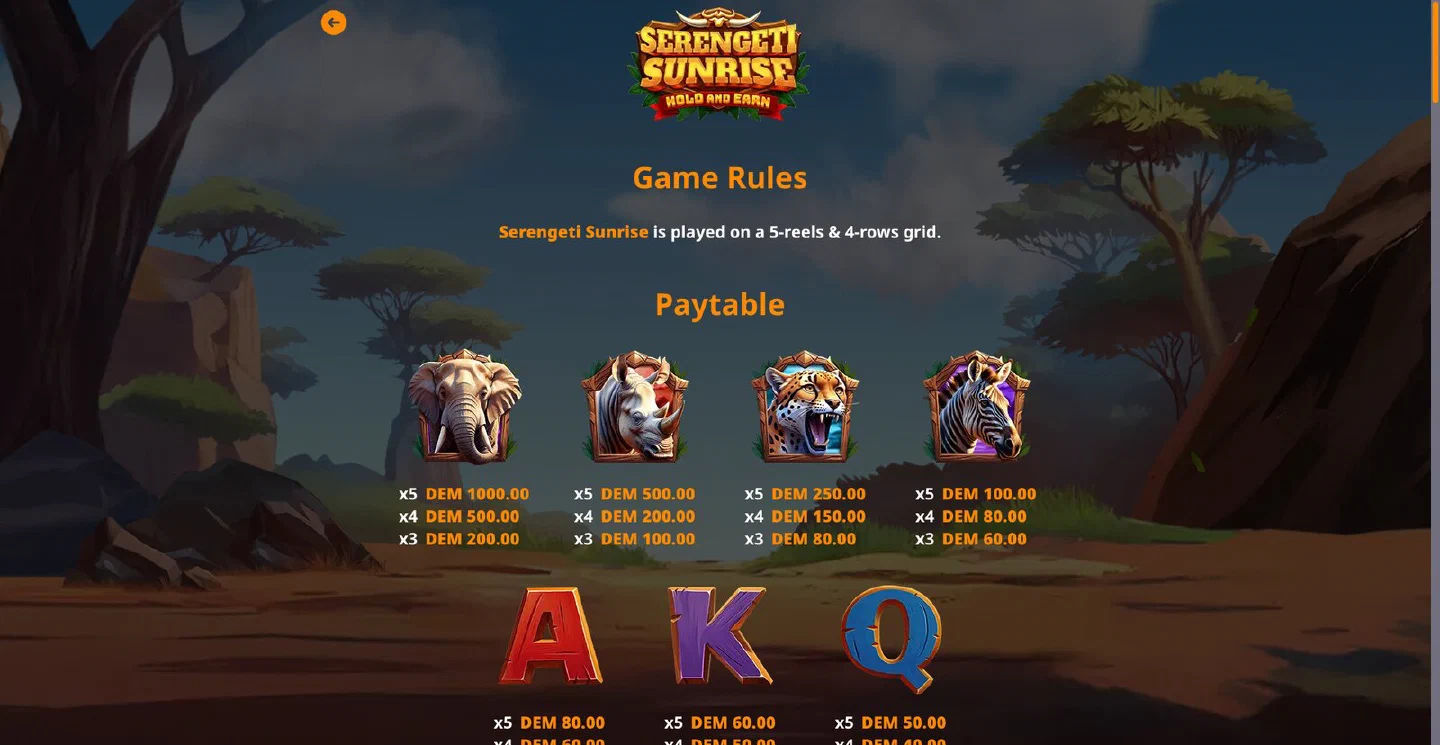
Every spin is independent. The reels do not warm up, they do not owe you a round after a dry spell, and the wins do not arrive on a schedule. The certified random number generator decides each result, and the outcome cannot be altered or predicted from your side of the screen. The 40 paylines pay left to right with only the highest combination on each line counted, and that rule is identical on your first spin and your thousandth.
What is in your hands is the size of the bet, the length of the session and the moment you stop. Those three choices set how much of your money passes through a game with a 95% return and a 5,000x ceiling, and they are the only levers on the table. A plan does not improve your chances on any individual spin. It improves the odds that you walk away on your own terms, which is the part of the evening you can actually influence.
For the game itself, the jackpot values and everything else that feeds this plan, start from the Serengeti Sunrise hub .
18+. No way of betting changes the result of a spin; what it changes is how much time and money you put in play. Set your limit with the responsible gambling page .